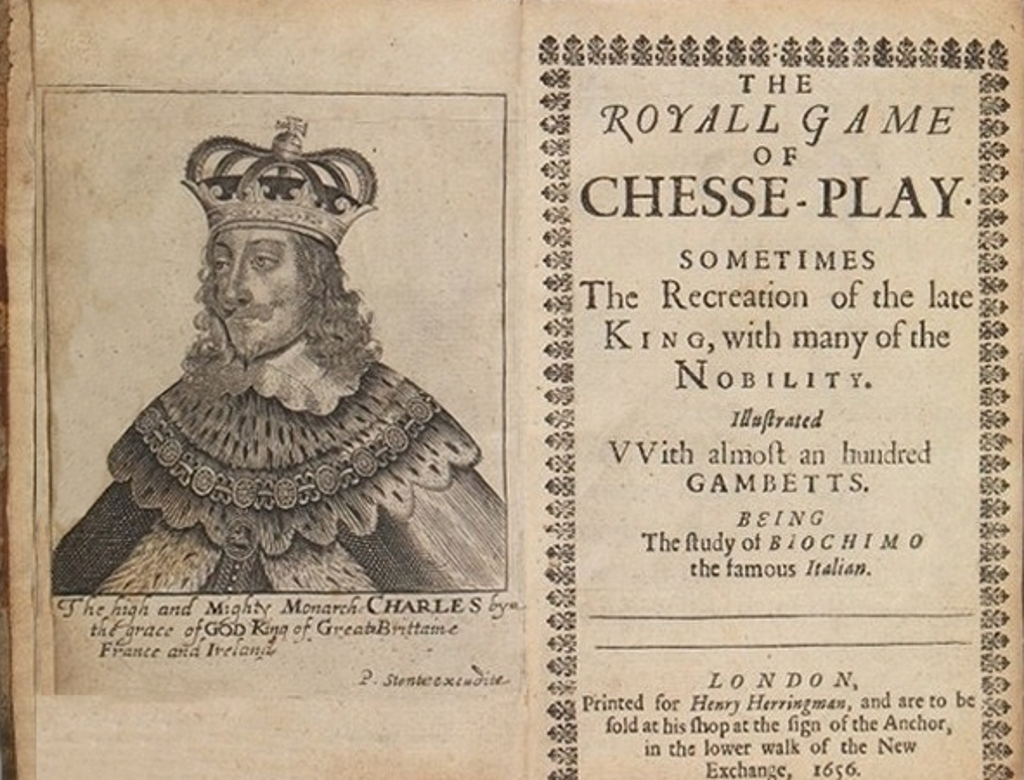
 Gioachino Greco was born in 1600 and lived for just around 35 years. He was Italian and called himself il Calabrese. As a writer and chess player he recorded some of the earliest chess games we know. He also contributed to chess theory, and this chapter deals with one example.
In his book Le Jeu Des Eschets, Greco published this study which demonstrates an important principle.
It is Black to play. The requirement is that he should draw. At first sight that looks incredible – after all, his opponent has two connected passed pawns. But it can be done, with a few sharp strokes.
The astonishing solution is that Black must play 1...Ra1+ 2.Rf1 Rxf1+ 3. Kxf1 and now 3...Bh3!! pinning the g-pawn, which he wants to take to reach a theoretical draw. How?
The endgame bishop and pawn against a lone king is generally won, even if the bishop doesn't control the queening square of the pawn. A tempo move or two will dislodge the defending king and the promotion is inevitable. However, there is one important exception.
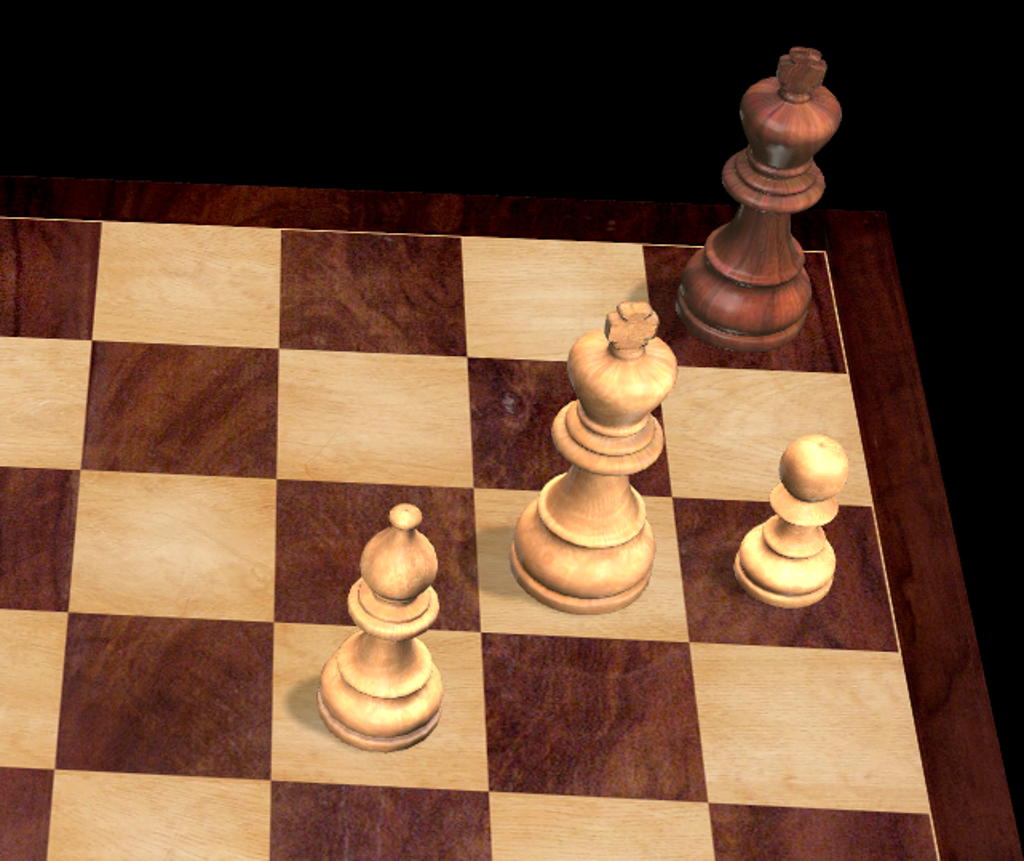 The endgame king, bishop and pawn vs king is always a draw when
-
the pawn is on the a or h file and the bishop does not control the promotion square; and
-
the defending king can reach the promotion square in time to defend it.
In the position shown Black simply moves his king back and forth between g8 and h8. White cannot play pawn to h7 or bishop to e6, because that is stalemate.
In his study Greco showed that even two pawns on the h-line cannot win. If White plays 4.gxh3 the black king simply moves towards the promotion square h8 and cannot be dislodged from there. It is an important lesson known to most chess players since Greco’s time.
To human players, that is. In the early days, this simple piece of chess knowledge eluded chess playing computers. They simply couldn't calculate all the way to the promotion, and without specific instructions on how to handle the position they would often take a wrong decision.
During the 1980s, when the first programs were being told about the wrong bishop draw, I devised a test position to find out if they could handle the endgame correctly.
In this position, White must capture the knight! For early computer generations the temptation to capture the bishop was too great – for the following reasons:
-
a bishop is valued higher than a knight, especially in open endgame positions;
-
Kxe5 keeps the king in the centre, while Kxc5 decentralizes it.
-
if the king takes the knight, the black pawn advances all the way to h2, where it gets a lot of bonus points for Black because it is just one square away from promotion.
After taking the bishop, the program can keep the pawn on the top half of the board for a long time. However, in the end – far beyond the thinking horizon of the computer – the black king and knight will help the pawn to promote.
Soon computers understood that taking the knight was the only way to secure a draw. The white king can then reach h1 corner and entrench himself there, permanently preventing the promotion of the a-pawn. The computers knew this because they were told so. The concept was included in their program algorithms.
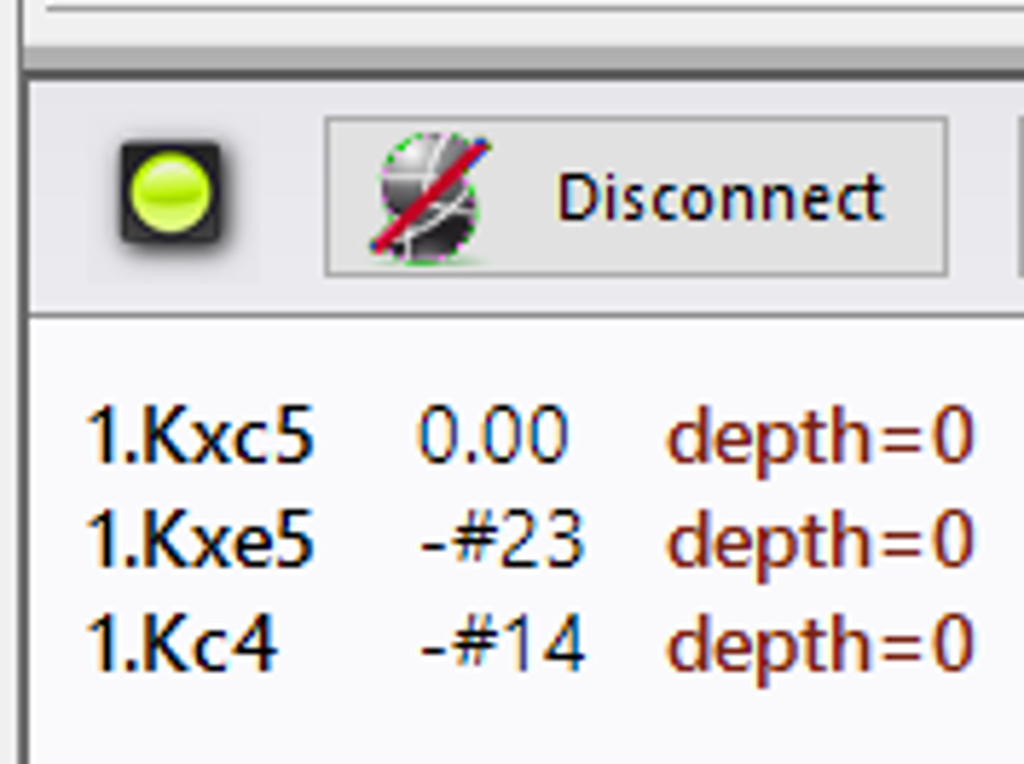 Today computers tell us, definitively, that only 1.Kxc5 draws. Even an early version of the program Fritz ascertained this in zero seconds. It did this without a traditional search. It used the five-piece endgame tablebases, which told it that 1.Kxe5 leads to a forced mate by Black in 23 moves; and in 14 moves if the white king moves to c4.
We come to a position I used to experiment on humans. I showed this study to a number of strong players, grandmasters and IMs, who took an average of 15 minutes to solve it.
In this diagram you can enter moves for White, and the engine will defend for Black.
Back in 1983 I showed this position to a 14-year-old girl. She sat in front of the board, never touched a piece, glanced up occasionally at me. Then, after 17 minutes, she dictated the entire solution correctly. It was Zsuzsa Polgar, who went on to become a grandmaster and one of the top female players in the world.
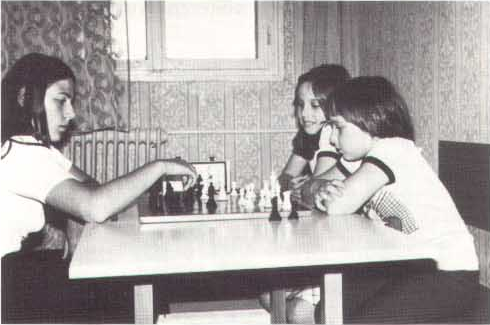
The next day I showed the study to Susan's sisters Sophi and Judit. Sophi was eight at the time, and Judit was just under seven. While eating apples and cake, they tossed the pieces around the board, coming up with the correct solution ("Sooo simple!!") in 22 minutes.
In the same year there was a Computer Chess World Championship in New York, and the guest of honour was ex world champion Mikhail Botvinnik. One day he visited the Bell Laboratories and at some stage was sitting in the chess club section of the cafeteria, waiting for a lecture to begin. I set up the four pieces on the board in front of Botvinnik. He looked at the position, and after a minute he said "White win?" I nodded, and he immediately showed me – a wrong line. I made the refuting move, and he set the pieces back to in the original position. Then he sat there without moving until, with a wry little smile, he executed the correct first move. The whole thing took him about ten minutes.
On that day I showed the position to the winner of the Computer World Championship, Cray Blitz. The program, running on a million-dollar 80 mega-flop machine (80 million floating point operations per second), spent 13 seconds considering a wrong key move – with a +4.032 score. Then, at ten ply, it switched to the correct move and displayed +10.878. Mikhail Botvinnik saw this all happen – he was not at all happy that a computer was able to solve the position so effectively, by pure brute force, without the chess knowledge he so ardently advocated.
I also showed (dictated, actually) the study to Mikhail Tal during a Candidates tournament in Saint John, Canada. Mikhail simply grinned and said: "I know it, Frederic – it is famous endspiel."
How to solve the study
So how can we win in the above position? Let us start with some logical analysis. Black threatens Kg1, so we have to move the bishop to let the pawn escape. But where must the bishop go? Our primary aim in this position is to prevent the black king from reaching h8. So the farther we move the bishop, the better it is. The black king must not be able to gain a tempo by attacking it on its path to h8.
So we try 1.Bc8 Ke3! (an important endgame principle: the white king is not allowed to join the battle. 1...Kf3? would be a mistake, as after 2.Kd4! Kf4 3.h4! Black finds himself in zugzwang.) 2.h4 Ke4! 3.h5 Ke5 4.h6 Kf6 and Black makes an easy draw.
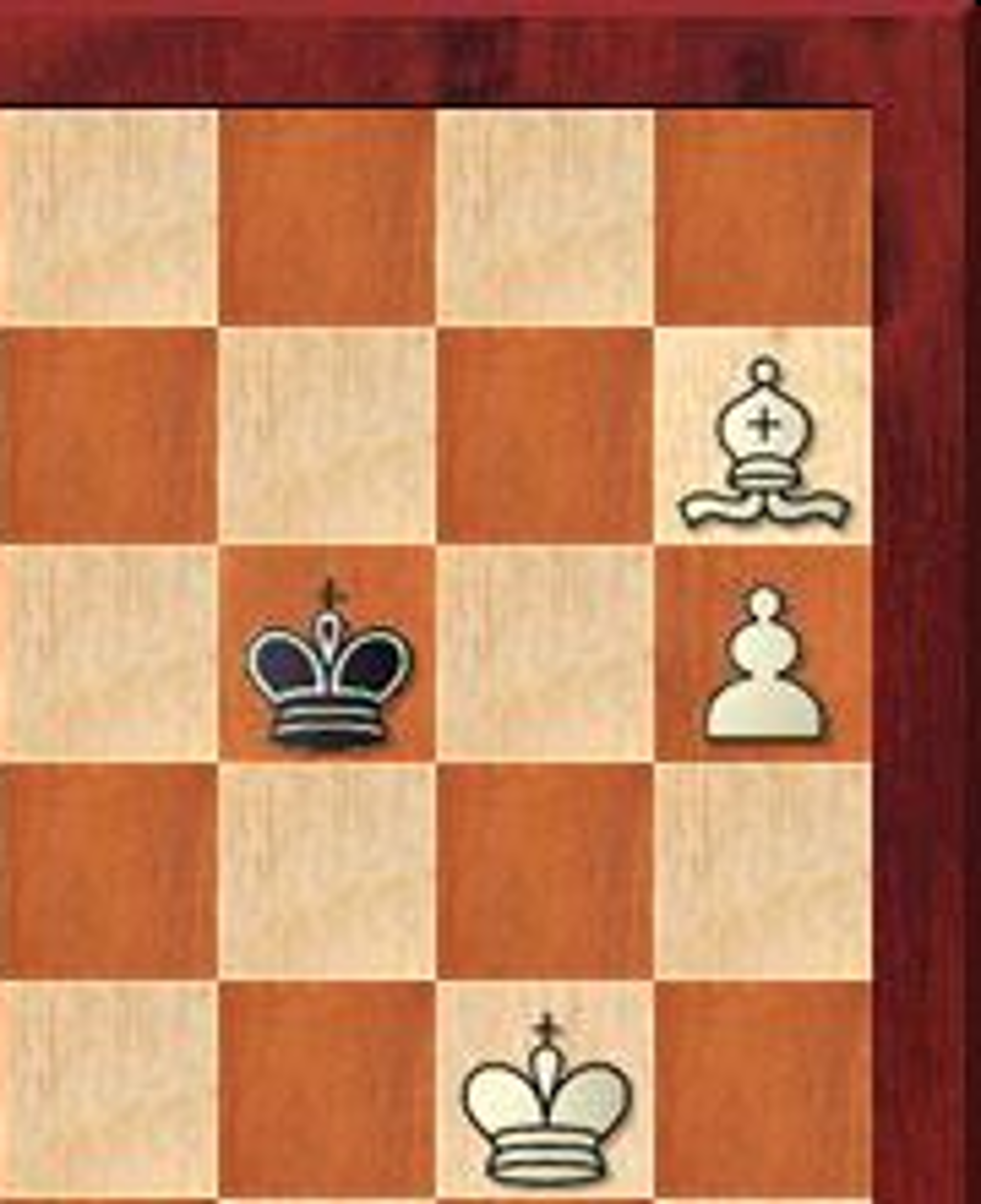 It is clear that the black king must not be allowed to get to h8 or attack the pawn. This is the position we must achieve. The black king has no path to h8, and cannot approach the pawn, because the g5 square is guarded. The white king will slowly push away the black king and queen the h-pawn.
Now let us use this pattern in the Vancura study. If we play 1.Bf5 Ke3 2.h4, then ...Kf4 wins a crucial tempo. We don’t need to analyse further – it's a draw. We can be trickier with 1.Be6 Ke3 2.h4 Ke4 3.h5 Ke5 4.h6. Of course the bishop cannot be taken now, so Black plays 4...Kf6 5.Bf5!? (stopping Kg6) 5....Kf7 (Black now threatens Kg8) 6.Bh7 Kf6! We have the same pattern, but with one problem: the white king needs to be on g4 but instead is on c3! Without the king's help it’s just a draw: 7.Kd4 Kf7.
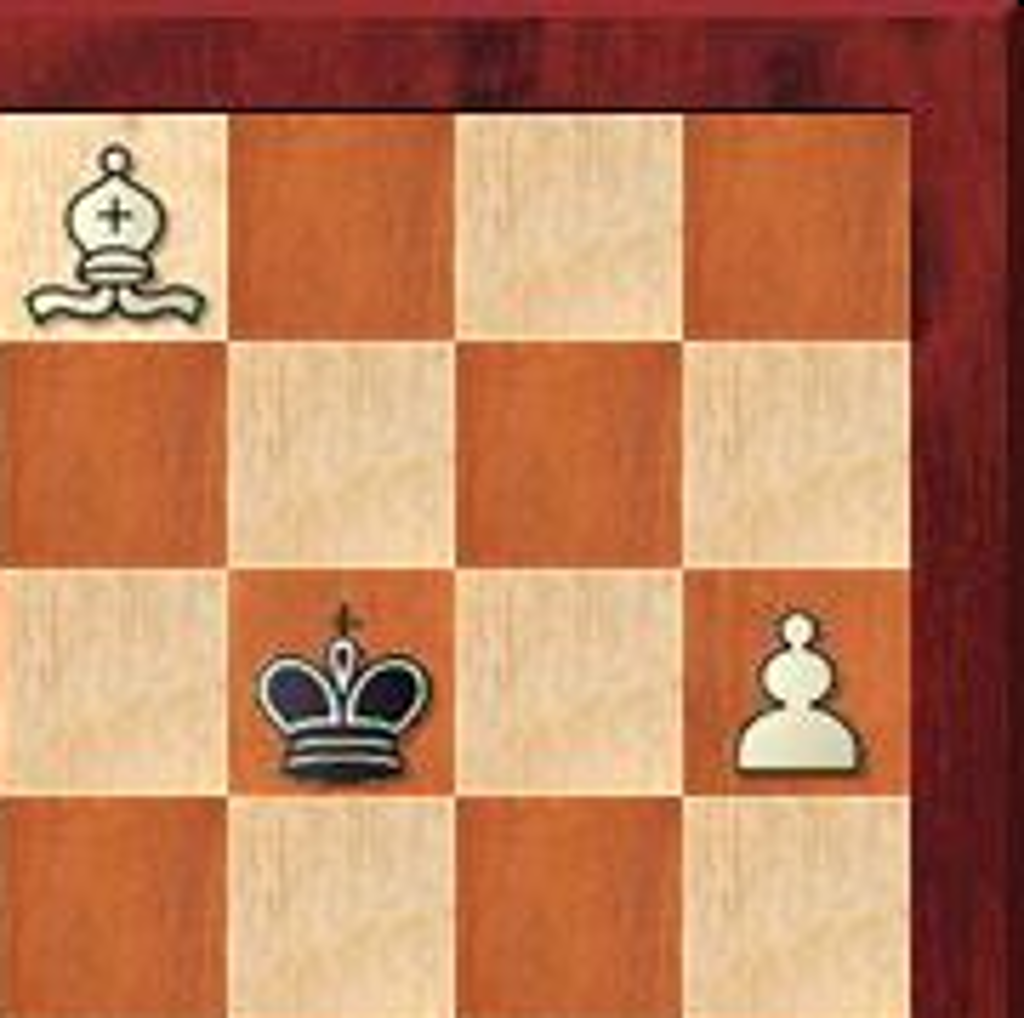 So we try to imagine setups by which we keep the black king away from the queening square with just the bishop and pawn. This requires some imagination, and also the belief that such a setup actually exists! If you try really hard, you will find this configuration.
What a position! The bishop and the pawn alone cover all the important squares and keep the black king at bay! The white king is not even required for queening the pawn. Black is in zugzwang and the h-pawn promotes.
Once you have envisaged this position, the answer to the Vancura study becomes quite easy. 1.Bd7!! Ke3 2.h4 Ke4 3.h5 Ke5 4.h6 Kf6 5.Be8!+-. We have achieved the winning position we were aiming for. You can replay the moves in the diagram, and switch the analysis engine on to try alternate lines. I would recommend the following for all players: whenever you solve a combination or a study, take a minute to commit the pattern to memory. If you do that, you will enlarge your arsenal with so many patterns and ideas that you will be able to solve problems at scintillating speeds!
Here you can start your journey of pattern memorization with the above diagram, so that whenever you have a bishop and a wrong colour pawn you know what to aim for and do not just settle for a draw!