ChessBase Magazine
French Winawer Variation 4.Nge2
Winawer light!
Petra Papp favours 1.e4 e6 2.d4 d5 3.Nc3 Bb4 4.Nge2!?
Our starting moves are 1.e4 e6 2.d4 d5 3.Nc3 Bb4, and now 4.Nge2!?.
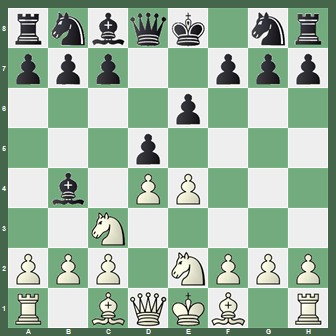
The French Winawer is an evergreen whose popularity remains unbroken. The variations can be quite complex, particularly after the main move 4.e5 which constitutes the main continuation. In this article, however, I want to focus on 4.Nge2!?, a very tricky line that involves a pawn sacrifice. White overprotects the knight on c3 and wants to play a2-a3 on the next move. I have experimented with this king's knight move many times in my practice, and it is one of my big favourites.
Since my analysis already starts on move 4, the article contains quite a lot of material (but still less than 4.e5, another big advantage of 4.Nge2!?). I have examined the critical positions in depth, highlighting the key ideas and patterns, and I have discovered many interesting lines that are full of dynamic possibilities. Objectively, Black can equalise, but there is a lot of play, making 4.Nge2!? a very nice weapon against the complicated Winawer!
In the above diagram, Black has various ways to react. I will examine A) 4...Ne7, B) 4...Nf6, C) 4...Nc6 and D) 4...dxe4.
A) 4...Ne7
Not a critical move. With the knight on e2, White can just challenge the black bishop without having to worry about their pawn structure being spoiled. 5.a3! Ba5. Understandably enough, this is much more popular than 5...Bxc3+ 6.Nxc3 which just gives White the bishop pair 'for free'.
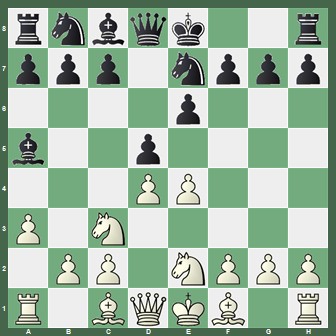
Now White has different approaches: the positional 6.g3, intending Bg2 and 0-0, or 6.b4!? followed by e4-e5 which is more aggressive, but also risky. Both is covered in Solodovnichenko,Y - Gdanski,J 1-0.
B) 4...Nf6
The third most popular move. This line is a mix of the Steinitz and the Winawer variations. Although it may seem like a strange combination, it is quite playable for Black. 5.e5 Nfd7 6.f4. White builds up the usual strong pawn centre. 6...0-0 7.Be3.
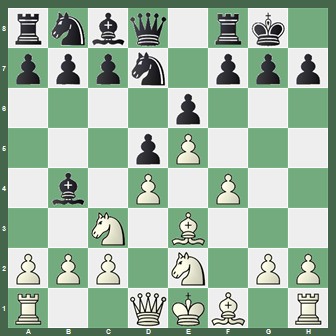
Following a3 to drive back the Bb4, White might aim for a quick f4-f5. Another idea is to reroute the knight with Ng1!? and then Qh5, when setups with Bd3 are rather dangerous for Black. The details are revealed in Gschnitzer,A - Ehrlich,R 1-0.
C) 4...Nc6
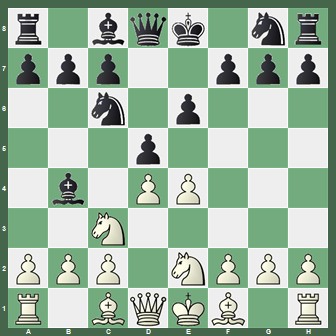
This logical move is the second most popular choice and a solid option. Black maintains the tension and waits for White's response. 5.exd5!?. Creating a symmetrical pawn structure in the centre gives White a slight edge since the Bb4 is not ideally placed (5.a3 will likely transpose to D) 4...dxe4, while 5.e5 is well answered by the undermining 5...f6!). 5...exd5 6.a3!. Using the fact that the bishop cannot move back to its natural square d6. 6...Ba5
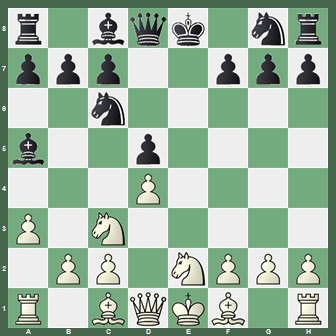
and now White has different approaches. Very logical is 7.b4 Bb6 8.Na4 followed by c2-c3, but I also like the rare 7.f3!? giving White the option to play Kf2. All this is covered in the analysis of Pacher,M - Kislinsky,A 1-0.
D) 4...dxe4
By far the most natural and logical reply. After 5.a3! Black can choose between two bishop moves.
D1) 5...Be7!?
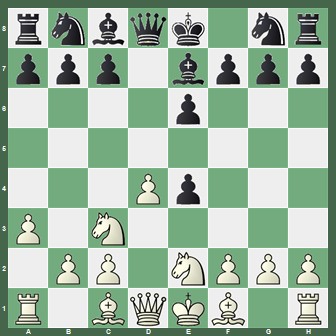
This retreat keeps more potential and fighting spirit. And now White has two main ways to play.
D11) 6.Nxe4
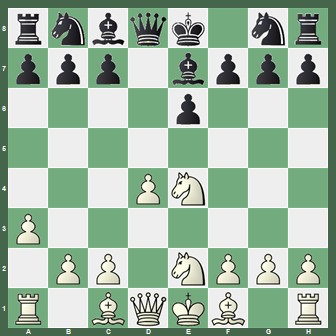
The simplest move is, in my opinion, also the best one. This position reminds us of the Rubinstein Variation. In Heimann,A - Meier,G 1/2, White managed to achieve a stable advantage against one of the biggest experts on this type of pawn structure.
D12) 6.g4!?
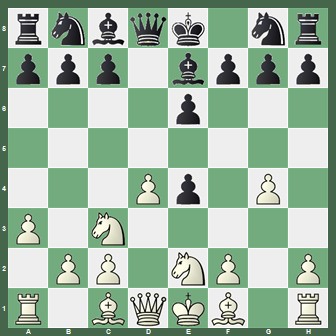
We know this from a different opening: the Sicilian Defence, where the g2-g4 pawn push is typically an aggressive move, particularly against the development of the knight to f6. While Black has several ways to equalise, there are many intriguing ideas for both sides. That’s why I wanted to analyse 6.g4!? in a separate game. I would emphasize one player: Jonny Hector, a Swedish Grandmaster, who is really the expert on this move and has successfully employed it in many games, several of them being featured in the analysis of Christiansen,J - Ramirez,C 1-0.
D2) 5...Bxc3+!
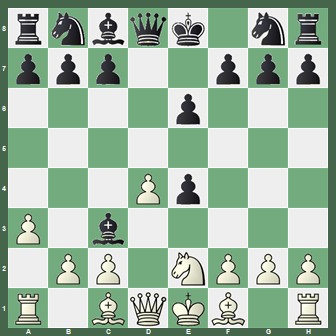
The most principled move. Black doesn't lose a tempo, enabling them to keep the e4 pawn with Nf6. 6.Nxc3 Nc6! (6...f5 or 6...Nf6 are inferior; White gains a clear edge in each case.)
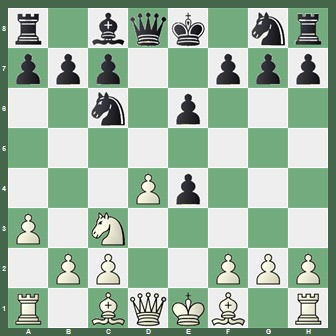
Attacking the d4 pawn is best. If White protects it with 7.Be3, Black can respond with 7...Nf6 without fearing Bg5.
This is a critical position. I have analysed two moves quite deeply. 7.d5!? opens the centre and aims to achieve a slight advantage, see Titan 1.1.0 64-bit 8CPU - PlentyChess 4.0.0 64-bit 1/2. However, I see the greatest potential in the very rare 7.Bf4!?. In many variations, White sacrifices the d4-pawn. Black must know exactly how to handle this position, see Kulon,K - Socko,M 1-0.
Conclusion: I hope, dear reader, that I have piqued your interest for the line 4.Nge2!?. One of the major incentives is that the material is about ten times smaller than with 4.e5, so you need to memorise much less. At the same time, there are many wonderful, tricky variations, as you can see in the selection of sample games. I wish you many victories with this smart alternative against the Winawer!