The 8th rank
by Jan Markos
Pawns are at a fundamental disadvantage compared to all other chess pieces: they can only move in one direction; they always move and capture forward. Consequently, they can only defend the space in front of them, not the space behind them. This is a key reason why the eighth rank (as well as the seventh rank—see ChessBase Magazine 231) is very attractive to attacking rooks.
In his video, Jan Markos presents three prime examples from grandmaster practice of how to use the eighth rank for an attack. In Bruzon–Jobava, White succeeded in forcing his opponent to play Ke8-f8, thereby preventing his castling. And he recognized early on the resulting weakening of his opponent’s back rank. After exchanging the defender on e7, Bruzon penetrated with 17.Qd7—the threat on the eighth rank is already in the air here.
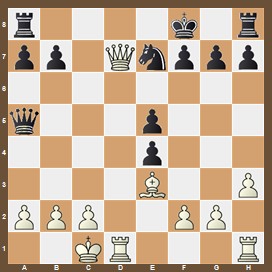
Jobava continued with 17…Rc8?. A mistake—how would you continue with White and end the game?
In the second example (Milov–Luther) as well, a misplaced black rook plays a central role.
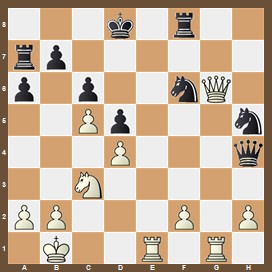
With 24.Qh6, White first attacked the vulnerable Rf8, and after 24…Rf7, 25.Rg8+ initiated the decisive attack along the eighth rank. 25…Kc7 26.Rf8 Rh7—and now the incredibly beautiful 27.Na4!! White can afford to give the queen, because after 27…Rxh6 28.Nb6, Black can no longer avert checkmate!
In the third example (Giri-Tari), Markos shows how important the eighth rank can become even in a double-rook endgame—because both the opponent’s king and his pawns can suddenly become targets this way!