A modern Nimzo
After 4.e3 0-0 5.Bd3 d5 6.a3 Bxc3+ 7.bxc3 dxc4 8.Bxc4 c5 Andrei Volokitin takes Black
Recently, there has been a attempt for White to fight for an advantage in the Nimzo-Indian Defence: 1.d4 Nf6 2.c4 e6 3.Nc3 Bb4 4.e3 0-0 5.Bd3 d5 6.a3. The logical 6...Bxc3+ 7.bxc3 dxc4 8.Bxc4 c5
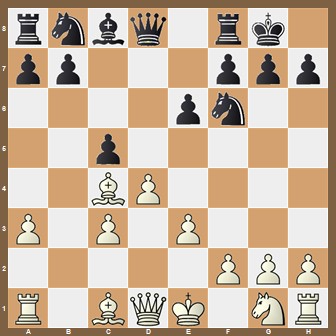
leads to our starting position. White has obtained the bishop pair, and must choose how to develop their king's knight, i.e. 9.Nf3 or 9.Ne2. This survey serves as a ready-to-use playbook for Black on how to react to both these continuations.
A) 9.Ne2 Nc6!?
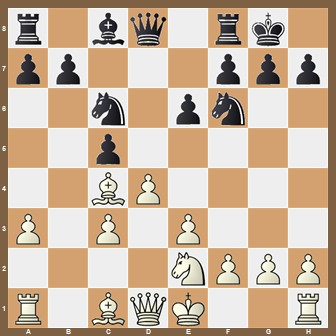
The first time I saw this knight move was in 2024 in a game between two legends, Ivanchuk and Gelfand. It immediately caught my attention, as Boris Gelfand is well known for his deep and fundamental opening preparation. The idea behind 9...Nc6!? is very typical for the Nimzo-Indian Defence: preparing the central break ...e5. 10.0-0.
Besides the natural castling, White also has a few other moves.
10.a4 intending to develop the bishop c1 to a3 occurred in a classic: Botvinnik-Reshevsky, Moscow 1946! After 10...Qc7 11.Ba3, strongest for Black would have been 11...Rd8!
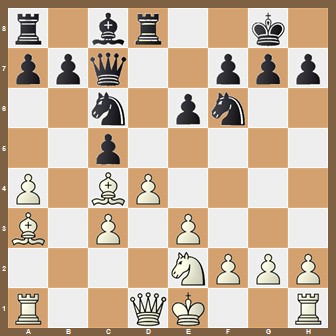
when they are just fine because 12.Bxc5 runs into the trick 12...Ne4! 13.Ba3 Nxd4! 14.cxd4 Qa5+!! 15.Kf1 Nd2+ 16.Kg1 Nc4=+.
10.Ng3 is the modern approach, intending to meet 10...e5?! with 11.d5 Na5 12. Ba2 when White is ready to support their d5-pawn with either c4 or e4. After 10...Qa5! 11.Bd2 Qc7 (targeting the unprotected bishop c4, the threat is ...cxd4, ...Nxd4 and ...Qxc4) 12.Rc1 Qd6
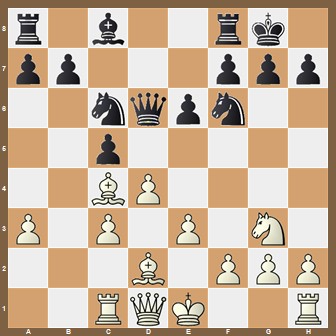
with the idea of ...e5 next Black's position looks playable. All these options are covered in the notes on Ivanchuk,V - Gelfand,B ½-½.
10...e5.
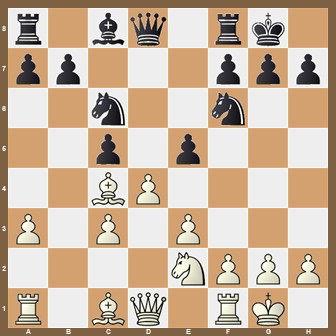
11.Bb2. Not the best reaction. The most logical move is 11.a4, when 11...exd4 12.cxd4 cxd4 13.Nxd4 Nxd4 14.exd4 Be6! 15.Bxe6 fxe6 leads to a position which is balanced but easy to play for Black due to their strong outpost on d5. 11...Na5! 12.Ba2 Be6!.
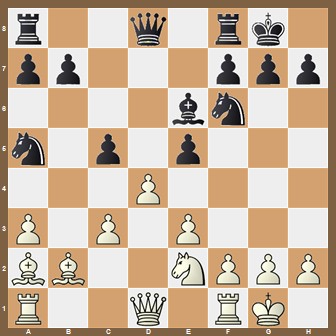
That's the point of Black's play! After exchanging the light-squared bishops, they will control the c4 square while White remains with a very passive bishop on b2. 13.Bxe6 fxe6.
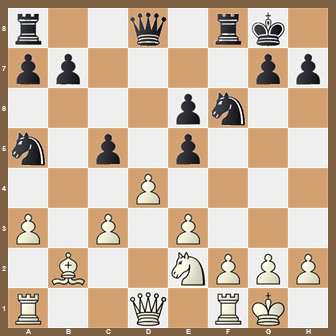
In this position, Ivanchuk played the inaccurate 14.Ng3?! when 14...Qd5! gave Gelfand an edge, see Ivanchuk,V - Gelfand,B ½-½. Later in 2025, Matthias Bluebaum chose 14.a4 against me and after 14...Rc8 15.Ba3 b6 16.Qb1 Nc4 Black was slightly better, see Bluebaum,M - Volokitin,A 0-1.
B) 9.Nf3 Qc7 10.Be2. This is the positional attempt to get an advantage for White after the opening, relying on the long-term strength of the bishop pair. 10...b6 11.Bb2. After 11.0-0 Black should choose the same follow-up: 11...cxd4 12.cxd4 Ba6!. Exchanging the bishops is strategically the right idea.
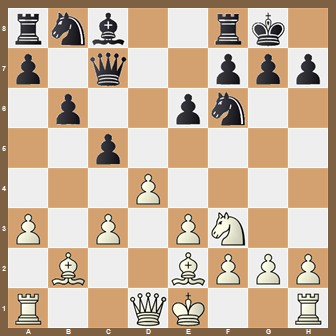
Here I first tried the simple strategy of developing my pieces with 11...Bb7 (see Kozak,A - Volokitin,A ½-½) and got a playable position, but potentially slightly better for White due to the bishop pair. After this game, I realised that the strategically correct plan is to exchange the light-squared bishops: 11...cxd4! intending 12.cxd4 Ba6!.
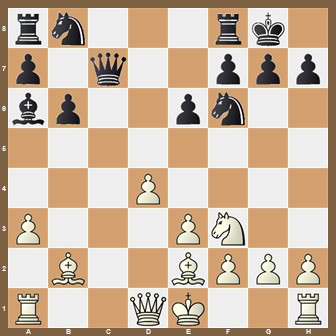
I think this is the right way to equalise the position.
In case of 12.exd4, Black should continue 12...Nd5!, eyeing the weakened square f4. 13.c4 Nf4 14.0-0 Ba6 15.Rc1.
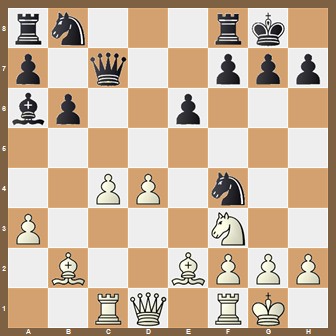
Gumularz,S - Volokitin,A ½-½ now saw 15...Nc6!? 16.Re1 Nxe2+ 17.Qxe2 Qf4! (a typical move, prophylaxis against Qe4) and I was totally happy.
After the above game, I realised that Black's most precise move order restricting White's options is the immediate 10...cxd4! 11.cxd4 (11.exd4 Qxc3+) b6!,
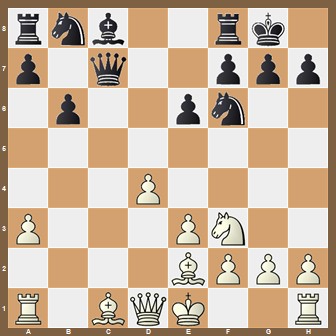
and with 11...Ba6 next, play transposes to 10...b6.
Conclusion: So, after both 8.Ne2 Nc6!? and 8.Nf3 Qc7 9.Be2 cxd4 10.cxd4 b6! Black easily equalises. According to my analysis, they have a comfortable game and can play not only for a draw, but ultimately even for victory if White makes routine moves.