ChessBase Magazine
Sicilian Kan Variation 9.Nd5
Grischuk's stroke of genius!
Petra Papp presents a surprise in the Sicilian Kan
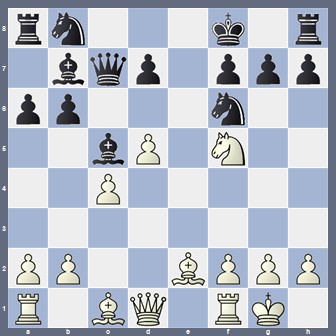
Our starting moves are 1.e4 c5 2.Nf3 e6 3.d4 cxd4 4.Nxd4 a6 5.c4 Nf6 6.Nc3 Qc7 7.Be2 b6 8.0–0 Bb7.
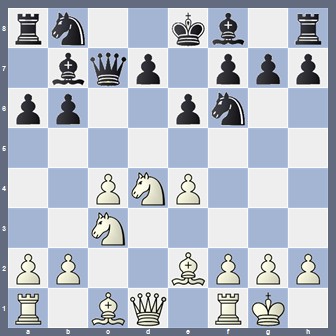
The Sicilian Kan Variation has always been regarded as a fighting opening. After 5.c4 Nf6 6.Nc3, Black employs the typical Hedgehog moves ...Qc7, ...b6, and ...Bb7, keeping the dark-squared bishop flexible (which can still be developed to e7, d6, c5 or b4). However, in the above diagram position there is a brilliant idea: 9.Nd5!!.
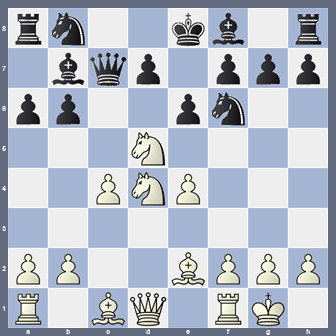
Few games featuring this knight sacrifice can be found in the databases, making it a real insider's tip! The most prominent player (though not the first) to employ it was Alexander Grischuk; one can therefore safely assume that he has analysed it in depth.
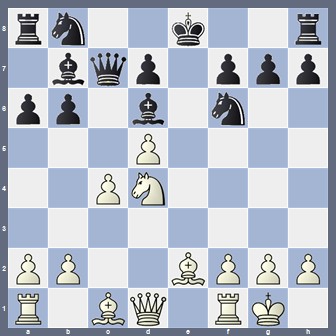
9...exd5 10.exd5!.
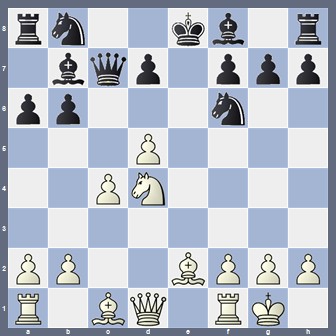
Let's take consider this position.
White has sacrificed a knight for long-term positional compensation. The e-file has been opened, and a major piece could soon appear there to pressure the black king on e8. The c4/d5 pawn pair completely paralyses both the bishop on b7 and the knight on b8. The move ...d7-d6 (to enable ...Nbd7) would weaken the c6 square and render the bishop on f8 passive. The white knight on d4 eyes an excellent outpost on f5. White's ideal setup consists of Bd3, Bg5, and Re1. Black relies primarily on manoeuvring the knight to e4 and forming a battery with Bd6 and Qc7 to generate counterplay. Finally, there remains the option of returning the piece with ...Nc6.
All in all, White's chances are great, and I am confident that 9.Nd5!! will gain big popularity!
In the above diagram, I will examine the following continuations for Black: A) 10...h6?!. B) 10...Bc5!? and C) 10...Bd6!.
A) 10...h6?!
Prevents Bg5. Nevertheless, this move looks like a pure loss of time. It occurred in a game played about 30 years ago. Gueth,D - Haufe,W 0-1 contained quite a few errors; but I made an important discovery, which is why I included it in the article anyway: 11.Bf3!.
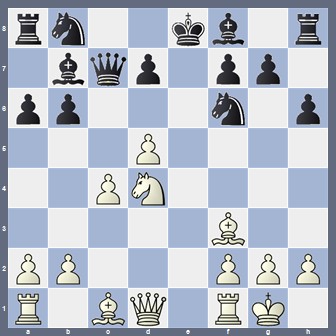
A significant improvement over the game. The bishop stands well on the h1-a8 diagonal, where there are many tactical points. Furthermore, White gets ready to immediately to utilize the open e-file with the heavy pieces. The game annotations also show what happens if Black plays 10...d6?!.
B) 10...Bc5!?
A logical move, the bishop is developed onto a natural square. 11.Nf5!. Certainly! The knight is really active on f5, threatening to take on g7. 11...Kf8!. After the natural looking 11...0-0 White has several very promising continuations, the most energetic being 11.b4!?.
Black protects the pawn g7 with the king, reserving the option ...Rg8 to solidify their position. Now, White has several plans, and it's hard to decide which is objectively best. In the annotations on Ballotti,L - Margaryan,A 1-0, I analyse three moves pretty deeply: 12.b4!? 12.Bg5!? and 12.Qd2!?. In all lines, White ends up with a very promising position!
C) 10...Bd6!
Most of the games saw this active move. The queen-and-bishop battery immediately gives Black counterplay along the diagonal towards h2.
11.Nf5! (11.Bd3!?, effectively preventing any ideas involving ...Ne4, is a very interesting novelty, see Narva,M - Martic,I 1-0.) 11...0-0 12.Bg5!. Active development. Black can attack this bishop with ..Ne4, but the knight will be quite unsafe there. 12...Bxh2+ 13.Kh1 Ne4 14.Be3!.
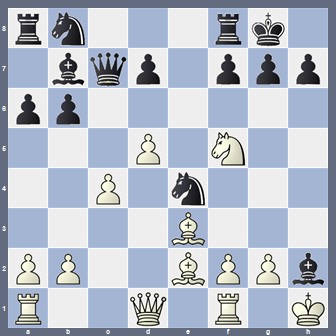
14...Be5 (after 14...Bf4!? White has two good replies, 15.Bd3 and 15.Bd4) 15.Bd3!.
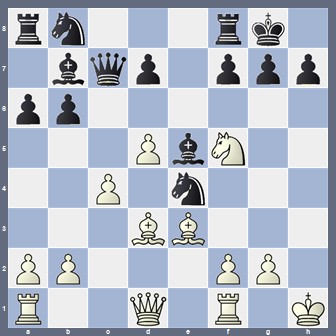
Attacking the unstable knight is the strongest move. Also, the d1-h5 diagonal is also now open for the white queen. In this very complicated position, Black needs to know and find difficult defending and counterattacking moves to survive. And even if they do, White retains the better chances. The game Grischuk,A - Jumabayev,R 1-0 saw 15...Nf6? 16.f4! when Grischuk scored a very nice victory!
Summary: I think the entire concept of the positional knight sacrifice 9.Nd5!! is brilliant. The idea is still relatively unknown (only 6 games in the database); so, if you have a precise understanding of the key concepts, you can quickly gain an overwhelming advantage. If Black knows the correct defence, they can hold the game, but White still retains a comfortable position. I wish you the best of luck in following in Grischuk's footsteps!