Every modern chess engine uses so-called hash tables in main memory to increase the execution speed of the program. Already-evaluated positions are saved in these tables. In the course of further calculations, the chess engine checks whether the position has already been saved in the tables along with the evaluation. If this is the case, the position does not have to be calculated and evaluated again. This technique saves much time and the program can calculate significantly deeper.
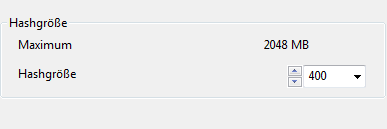
A few basic rules should be observed when using hash tables:
• Very large hash tables generally have a clearly positive effect only with long thinking times. In games with short thinking times (e.g. blitz chess), smaller hash tables are entirely sufficient even on very fast computers. Also pay attention to the manufacturer's specifications and recommendations.
• If you set the maximum value for the hash tables, all other actions – e.g. entering moves – may be considerably slowed down. You should therefore always set the hash tables a little below the maximum value. The maximum value only makes sense if you want the program to calculate on a position for a very long time (e.g. overnight). In that case, first make all desired settings and then set the maximum size of the hash tables.